

*All student sources used in this story asked to remain anonymous due to the illegal nature of sports betting, their names were replaced with aliases to protect their privacy.
THE BETS ARE ON
Sports betting is more common than ever among teens. This growth has been aided by the legalization of sports betting in 40 states, including Kansas where it became legal for adults 21 years and older in 2022.
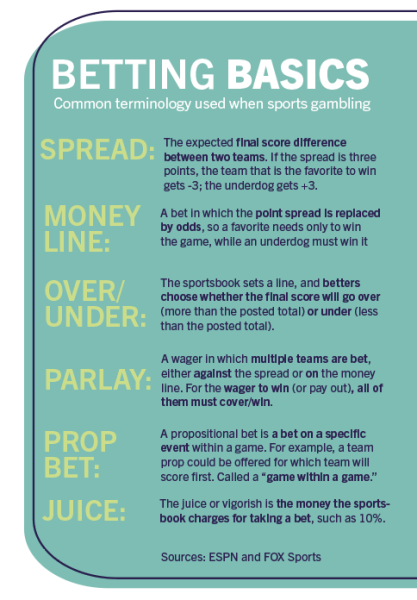
Now, sports betting isn’t just legal, it’s common even among students who aren’t of legal age to bet. In 2023, The National Council of Problem Gambling reported that 60-80% of high school students had gambled at least once. A 2023 study by the NCAA revealed that 60% of 18-22 years olds have bet on games.
Online sports betting sites flourished as people began to bet from the comfort of their own homes which allowed easier access for people to bet. In a 2025 Kansas Gambling survey, over 36% of people said they bet on sporting events at least once a month
Marketing teacher Kurt Golubski agrees that sports betting rose in popularity due to more advertising by online sports betting sites.
“When I was younger, I remember seeing the lines before sports games, I just didn’t know what it meant,” Golubski said. “But then, as soon as online gambling became a thing, it almost seemed like everywhere I turned commercials were about it. As soon as it became legal, I definitely noticed it becoming a major part of our society.”
Psychology teacher Kirsten Jones agrees that sports betting is commonly pushed to high schoolers through their phones.
“It’s on every social media feed, every commercial break and inside the apps people already use,” Jones said. “For teens especially, anything that feels competitive, social and just a little risky can seem incredibly appealing.”
LOOSE LEGALITY
In the state of Kansas, individuals have to be over the age of 21 to place wagers on sports. Wagers have to be placed either in one of the state’s 10 legal casinos or online through the six allowed sports gambling apps, including BetMGM, FanDuel, Caesars, Fanatics, Bet365 and DraftKings.
According to the American Gaming Association, in-person sports betting decreased in 2024 while mobile sports betting increased by around 50% and generated around $10.4 billion in revenue.
Despite sports betting being illegal for high school students, 16% of the 143 students surveyed have admitted to participating in some form of sports betting.
Despite not being of legal age, many high schoolers place bets with the help of their parents. Eric, a student who asked to remain anonymous because he participates in illegal sports betting, started betting after his parents introduced him to it.

“My mom doesn’t bet. She’s not into sports, but she’s fine with it,” Eric said. “[My dad and I] actually haven’t put in any of our own money. The second is that we get into a deficit margin where we’re actually losing money, then we’ll stop for a while.”
Other students interviewed for this story admitted that their parents provided them with a legal age ID or a Social Security number necessary to create betting accounts to pass age verification tests.
Because parents are typically the ones who help their teens get started betting, Jones thinks parents and Advertisements are responsible for the teen gambling problem. According to a study by The National Council on Problem Teen Gambling, about 5% of all young people between 11 and 17 meet at least one of the criteria for a gambling problem.
“[The apps] are designed to hook users, including young ones,” Jones said. “The responsibility falls on these companies, but it also falls on the adults around teens to help them navigate it. As much as it’s a crisis of corporate greed, it’s also a crisis of parenting and governance.”
WHERE IT GETS STARTED
In an age where technology is fighting for everyone’s attention, it’s natural to see a shift in how gambling platforms utilize modern marketing strategies. One of the most commonly seen strategies is advertising through social media. These advertisments specifically target young and impressionable audiences.
Teenagers are already jumping at opportunities to start sports betting after seeing ads. Without fully developed minds, it’s possible some teens do not understand how addictive online gambling can be, according to marketing teacher Nicole Porter. Porter believes that sports betting ads can be misleading for teens.
“I think it’s still more serious than a regular game, even if teens perceive it the same way because of maturity,” Porter said. “I don’t think the apps clearly explain what sports betting really is, so teens might view it like strategy gaming instead of gambling.”
Gambling, like many other things, is a social trend and when combined with sports, which are already very popular, it makes for a good combination to discuss with friends and family who can determine their gambling outlook. For anonymous student source Eric, different factors encouraged him to start gambling, especially online advertisements primarily through social media platforms.
“There are definitely influences with that, especially TikTok ads; they do get me by putting these big deals out, and then I’ll go for that,” Eric said.

Another reason why sports gambling is gaining so much popularity is because of how easy it is for underage people to sign up and get access to money that apps provide to users in order to get them to place bets.
On most of the leading sports gambling apps, there is often a bonus for signing up, giving free money to place bets. This makes it a lot easier for those who don’t have an income to start gambling without feeling like they have spent their personal money. Ernest, who also asked to be anonymous because he bets on sports illegally, said the lure of free money was a major factor in his original decision to begin sports betting.
“[The app] had a thing where it was a $20 free bet if you signed up, you didn’t have to enter any money or anything,” Ernest said. “That was honestly probably where I made the most money from, because I won that $20 bet, and then just kept winning without depositing a single dollar. I feel like that was probably the most influential.”
A RISKY GAMBLE
The reality of sports betting is that when it is taken too far, the desire to win can eventually blur out the potential negative mental health and legal consequences.
A study by the National Library of Medicine concluded that young adults ages 18-29 had higher scores of depression, anxiety, loneliness and stress as a result of sports betting. Young adults, who were already sensitive to the negative mental health effects, could be more impacted by the potential negative effects of sports betting.
When sports betting the reward of winning releases dopamine, which according to Jones, creates a reinforcement and makes students more likely to continue betting. In this way it makes betting similar to other forms of addiction.
“When someone wins, even a small amount, the brain releases dopamine,” Jones said. “That reward signal creates a powerful “do that again” message in our brain circuitry and chemistry. Engaging in sports betting and borderline or full addiction sets up our students to struggle more later in life as these patterns they are creating in the brain can be lasting and determine future brain processing.”

However, for some students such as Greg, a student source who asked to remain anonymous because he illegally sports bets, the extent to which he bets prevents him from falling into addictive patterns.
“I haven’t gotten addicted to [sports betting] and it definitely makes watching sports more fun,” Greg said. “If I won a lot more, I would definitely get more addicted to it.”
For John, an anonymous student source, he uses his mom’s ID to create his online wager account and keeps a monthly cap helps him stay in control.
“I only deposit like $200 a month in my account,” John said. “If I go over that, then I just stop doing it for that month.”
However, even with students placing limits on themselves, Golubski has observed how students may struggle to see the negatives of sports betting and encourages students remain cautious.
“I don’t think teenagers really understand the consequences of getting trapped into it that young,” Golubski said. “You really can’t stress the importance enough to teens on how to be careful with it.”