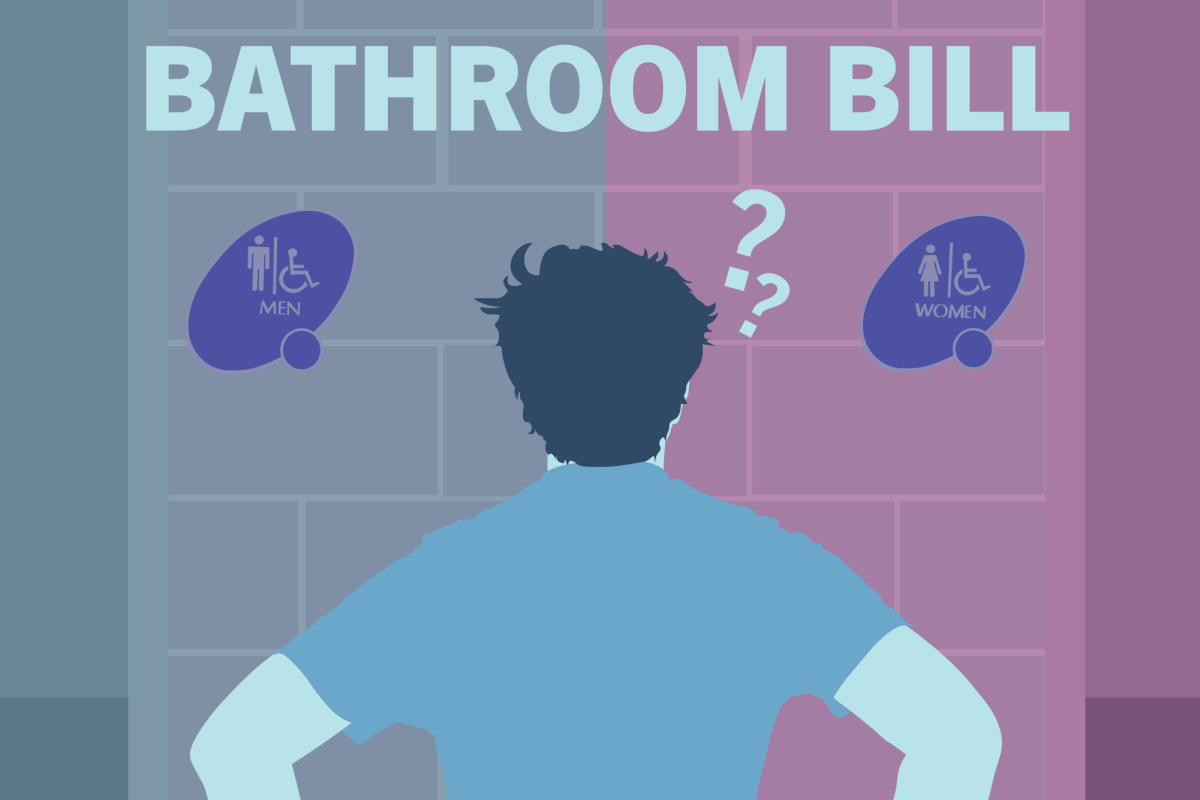
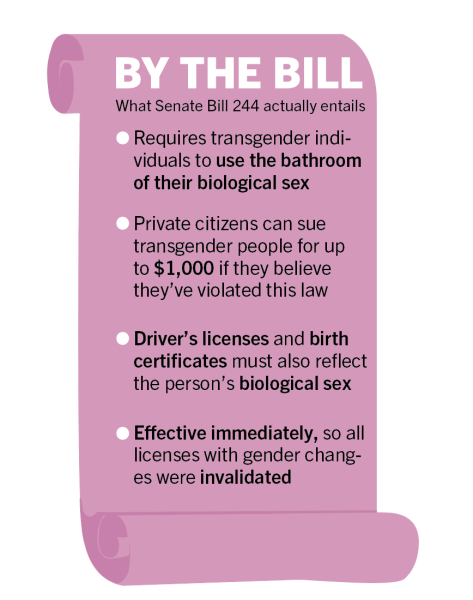
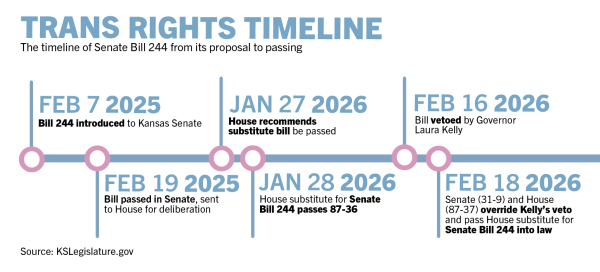
After overriding Governor Laura Kelly’s veto, the state of Kansas recently passed legislation that will force people to use the bathroom of their biological sex in government buildings.
The law, which went into effect Feb. 26, also requires all driver’s licenses and birth certificates to indicate biological sex, invalidating all documents that have been previously issued to transgender individuals.
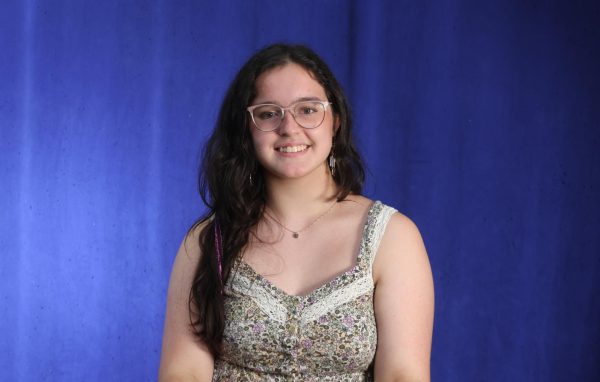
For transgender students at the school, this means they would have to use the bathroom of their biological sex or use one of the gender neutral bathrooms in the school. Freshman Raine Cormany’s reaction to the bill was one of uncertainty about what this could mean at school.
“I anticipated something like this happening at some point, because we’re in a red state, but then I realized, ‘Oh, crap, schools are government buildings,’ and that part of it made me freak out,” Cormany said. “So when I heard about it, I started thinking to myself, how many gender neutral bathrooms are there? How am I going to be able to get to them?”
The gender neutral restrooms currently in place at the school will not be impacted by this new law. Principal Dr. Gail Holder plans to make any changes necessary in order to be in compliance with the law, but protecting students remains an important goal.
“I want [students] to know this is not about us not supporting you, but this is about us walking the line between, first and foremost, supporting you and your basic needs, but also being in legal compliance with what we need to do as of right now,” Holder said.
The law includes spaces other than bathrooms such as locker rooms, and will change the current process for locker rooms. Physical education teacher Christine Preston explains how transgender students used to be allowed to use the locker room that aligns with their gender before Senate Bill 244 was passed.
“We [had a transgender student, male to female], and the only thing we did differently was allow that student access to the locker room by themselves,” Preston said. “They went in, got changed, came out and then the rest of the class went in afterwards. They would get dismissed a few minutes earlier to go into the locker room, too.”
While the legislation creates minimal changes with the bathroom system at the school, some, such as Cormany, feel the bill is a part of a larger issue within the state surrounding transgender people.
“This is obviously legislation that’s fueled by hate, fear or some very negative emotions,” Cormany said. “They like to say it’s for protection, but in my opinion, it’s just fueled by fear and anger.”
Sophomore Nik Ayers agrees, believing that this bill could lead to more anti-transgender legislation.
“[The school] enforcing this bill would make me feel like I am not seen as a human being and that I don’t really have a right to exist,” Ayers said. “[The government is] taking away my right to exist and be comfortable in my own skin. It’s not really about bathrooms.”
Another aspect of the bill is the requirement that gender markers on driver’s licenses match people’s biological sex. Ayers also believes that having a driver’s license that does not match someone’s gender could create confusion.
“Transgender individuals almost always go through surgeries and procedures to make themselves feel more comfortable and look like the gender they are wanting to be,” Ayers said. “If you know someone who looks very clearly like a man but has female on their driver’s license, it will create verification issues because that‘s not a woman.”
Holder has hopes that the changes in legislation won’t affect how safe transgender students feel or how they’re treated at school.
“I hope that the culture of Mill Valley sees this through because we’re a place where hopefully people feel they belong, regardless of who they are,” Holder said. “I look to our students and staff that are currently here to be ones that will continue to support all students, regardless [of the bills passed].”
Ayers also has faith that the school will continue to support transgender students to the best of their ability.
“I like to think that our school is very progressive,” Ayers said. “I feel safe at school, safe with the teachers I have, and I feel that the people working at our school will respect me as a person and will not force me into something that I’m uncomfortable with.”