

On the morning of Jan. 3, the U.S. conducted a military operation across Venezuela, including in the capital Caracas, where Maduro and his wife, Cilia Flores, were staying and eventually captured. Now in New York City, Maduro and Flores face criminal charges. With this, many questions remain about the future of Venezuela and whether or not this was the correct approach.
Is It Legal?
Internationally, no.
The Trump Administration has justified its attacks using the President’s Article II constitutional powers, which give him the authority to defend the country against threats. In this case, the administration refers to the Venezuelan drug cartels.
International law experts criticise the decision, stating that drug trafficking and gang violence are considered criminal activity and do not justify a military response. International law prohibits the use of force in international relations except for narrow exceptions such as authorization by the U.N. Security Council or in self-defense (Article 2 (4) of the UN Charter).
Domestically, the facts surrounding legality become complicated and unclear.
Presidents have long asserted the right to engage in limited military operations without seeking congressional authorization. The president is in charge of federal law enforcement and is also the commander-in-chief of the armed forces, and it can be argued that those powers are sufficient to support the Maduro operation.
However, Democratic lawmakers persist in their claim that the operation in Venezuela, without congressional approval, violated domestic law.
Because the operation was a violation of the UN Charter, they argue, it violated U.S. law, too.
This is because in 1973, a near-unanimous Senate voted for the UN Charter to become domestic law binding on the president.
For now, the administration appears to be curbing formal charges, despite debates around its legality. The U.S. Senate has advanced a resolution that would bar President Donald Trump from taking further military action against Venezuela without congressional authorization, but sources such as Reuters and ABC News label its success as unlikely.
Did the U.S. Invade Venezuela For its Oil?
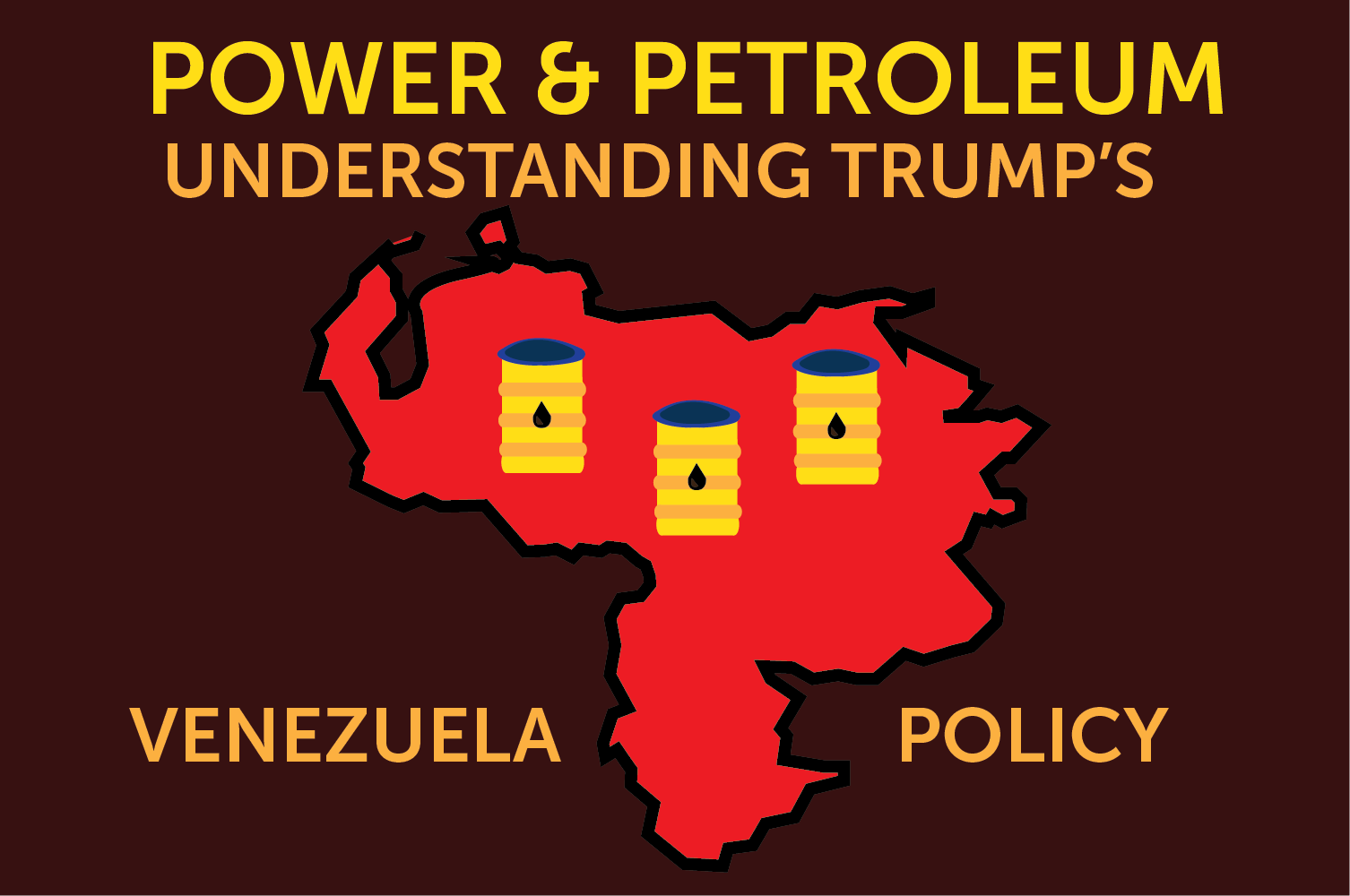
Trump’s team has said that they aim to revitalize the country’s oil sector. In a Jan. 3 press conference, Trump stated that Venezuela stole oil from the U.S., and that it’s necessary to retrieve it.
“We built [the] Venezuela oil industry with American talent, drive, and skill, and the socialist regime stole it from us,” Trump said.
This idea comes from 2007, when the Chávez regime enacted another nationalization plan that allowed Venezuela to take a minimum 60% stake in foreign oil projects. The U.S. oil companies that did not agree to these terms claim that their compensation has yet to be paid, but this remains unproven.
No matter what, the Trump administration’s plans to jumpstart the oil industry will be difficult.
In terms of accessibility, one may remember it took nearly two decades to revitalize Iraq’s oil industry after the U.S. invasion. Today, other superpowers stand in the way in ways they did not in 2003.
Additionally, military action in Venezuela is not an easy way to unlock oil barrels quickly, Jeff Krimmel, founder of Krimmel Strategy Group, a Texas-based energy consulting firm, told news source Al Jazeera.
“Even if you were trying to solve a short-term supply deficit, which, to be clear, we do not have, Venezuela wouldn’t be an answer,” Krimmel said. “It would take too long and be too expensive to ramp production up.”
What happens to Venezuela now?
Venezuela’s Vice President Delcy Rodríguez, who was part of Maduro’s inner circle, has been sworn in as the interim president by the nation’s Supreme Court.
According to the Venezuelan Constitution, the vice president can take over for up to six months with a vote of the National Assembly. In handing temporary power to Rodríguez, the Supreme Court made no mention of the 180-day time limit, leading some to speculate she could try to remain in power even longer.
US Secretary of State Marco Rubio had reportedly spoken to Rodríguez, who had expressed her willingness to do “whatever the U.S. asks.” This is at odds with Rodríguez publicly refusing that Venezuela would become “a colony of an empire.”
“What is being done to Venezuela is an atrocity that violates international law,” Rodríguez said, surrounded by high-ranking civilian officials and military leaders.
It is unclear how Rodríguez will rule Venezuela at present, and how she will handle the U.S. oil industry.